
I've watched too many procurement directors sit in air-conditioned offices, see "Q345 double-truss1," "900GSM2," and "150km/h wind rating3" on a quote sheet, and think they can sign off immediately. After eating red dust in mining sites for 20 years, I need to tell you a brutal truth you won't find on Google: in extreme environments, what destroys your million-dollar heavy equipment isn't the 150km/h headwind—it's "toxic rain4" and "death flutter5."
The real threat to your machinery isn't the wind itself—it's the invisible chemical warfare happening inside your shelter and the mechanical whipping that tears premium materials apart within months. Understanding these two phenomena separates amateur buyers from professionals who protect assets worth millions.
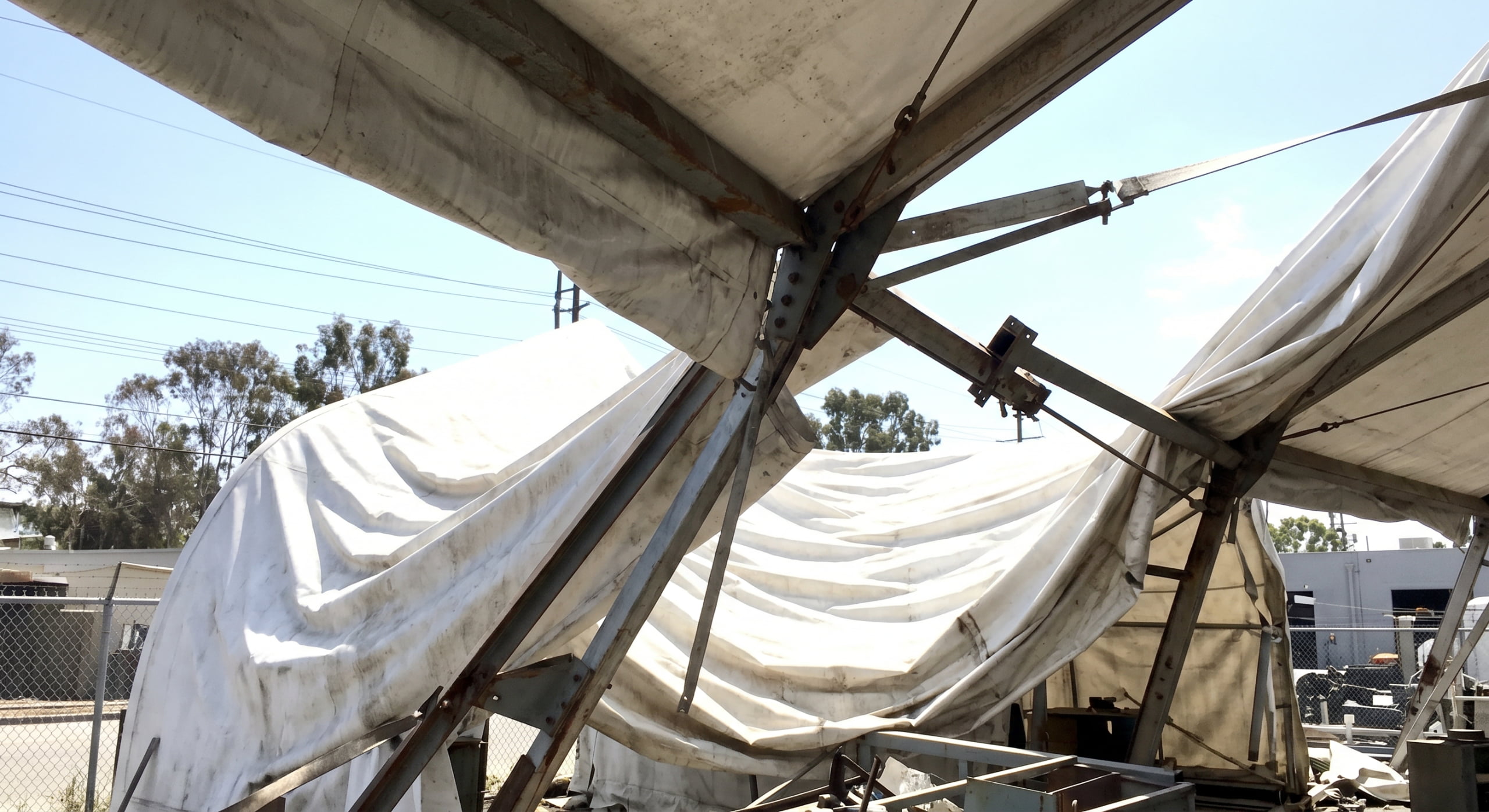
Most suppliers sell you numbers. I'm going to show you what those numbers actually mean when a 200-ton haul truck parks inside your shelter overnight. Let me walk you through the two traps that destroy equipment and how we engineer around them at Prime.
What happens when your "protective shelter" becomes a toxic gas oven?
You just spent $800,000 on a mining haul truck. After a brutal 12-hour shift, this steel beast rolls into your fully-enclosed container shelter. The engine is still radiating heat. The hydraulic oil is warm. The chassis is caked in mud and diesel residue.
In regions with extreme day-night temperature swings like Australia or Canada, the massive heat radiating from your machinery meets the rapidly cooling PVC roof at night, creating severe condensation known in the industry as "container rain6"—acidic droplets that corrode precision electronics7 and hydraulic components8, reducing equipment lifespan by 15-30%.
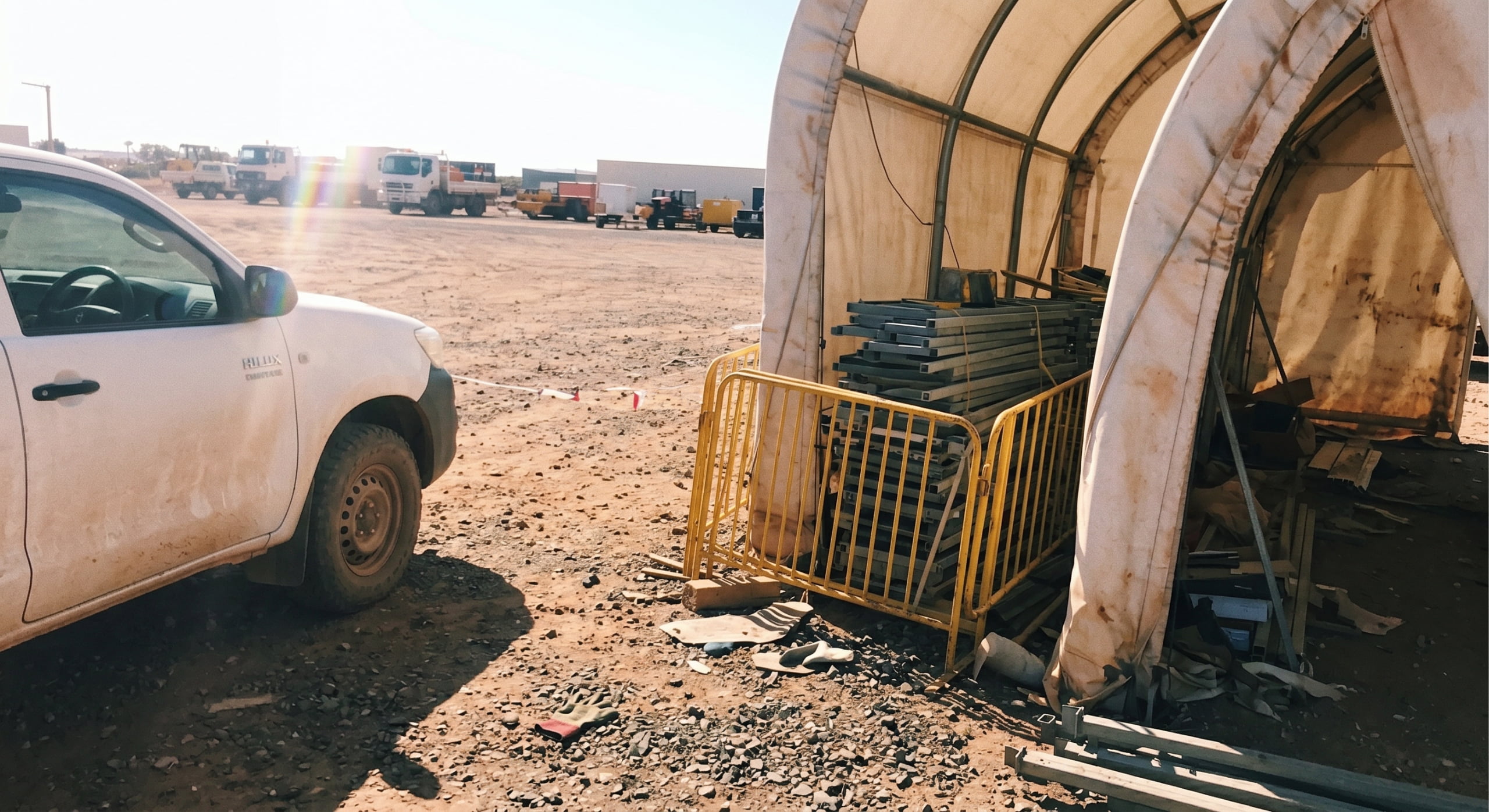
This isn't ordinary water. The droplets mix with diesel fumes and industrial dust. They become acidic liquid dripping onto your precision circuit boards and hydraulic cylinders. Authoritative engineering studies show this hostile microclimate can slash heavy equipment lifespan by 15% to 30%.
I've seen $50,000 electronic control units corroded beyond repair after just one winter season. The shelter was supposed to protect the equipment. Instead, it created a chemical attack chamber.
Real engineering shelters don't just seal both ends. We calculate the exact heat output of your stored equipment. We design precise top ventilation systems based on thermal dynamics9. At Prime, we're not selling tents. We're selling microclimate management systems10 for expensive assets.
Here's what proper ventilation engineering11 looks like:
| Equipment Type | Heat Output (BTU/hr) | Required Roof Vents | Air Exchange Rate |
|---|---|---|---|
| Mining Haul Truck (200-ton) | 45,000-60,000 | 4-6 motorized units | 8-12 cycles/hour |
| Excavator (50-ton) | 25,000-35,000 | 2-4 passive vents | 6-8 cycles/hour |
| Generator Set (500kW) | 70,000-90,000 | 6-8 motorized units | 12-15 cycles/hour |
We don't guess these numbers. We calculate them using ASHRAE industrial ventilation standards12. Each shelter design includes thermal modeling13 to prevent condensation formation at the dew point. The roof vents aren't optional accessories—they're engineered components sized to your specific machinery's thermal signature.
I learned this lesson the hard way in 2015. A mining client in Western Australia stored three CAT 789D trucks in what looked like a premium shelter. Within four months, the hydraulic control valves started failing. The maintenance team couldn't figure out why. I climbed inside one morning and saw the roof literally raining acidic water onto $2 million worth of equipment. The shelter had zero ventilation strategy. The supplier had focused entirely on wind resistance and ignored thermodynamics. That mistake cost the client $180,000 in repairs and three weeks of lost production.
Everyone obsesses over 900GSM2 fabric thickness. But thickness means nothing when physics takes over. In the brutal cycle of scorching days and freezing nights, even the best PVC experiences microscopic relaxation. The material expands in heat and contracts in cold. This is basic thermal physics.
If the manufacturer doesn't understand mechanical tensioning design, even one centimeter of fabric slack transforms that heavy-duty material into a massive whip under 150km/h winds, creating a phenomenon called "wind flutter"—high-frequency fabric-to-steel impacts14 that shred even the best waterproof coatings within six months.
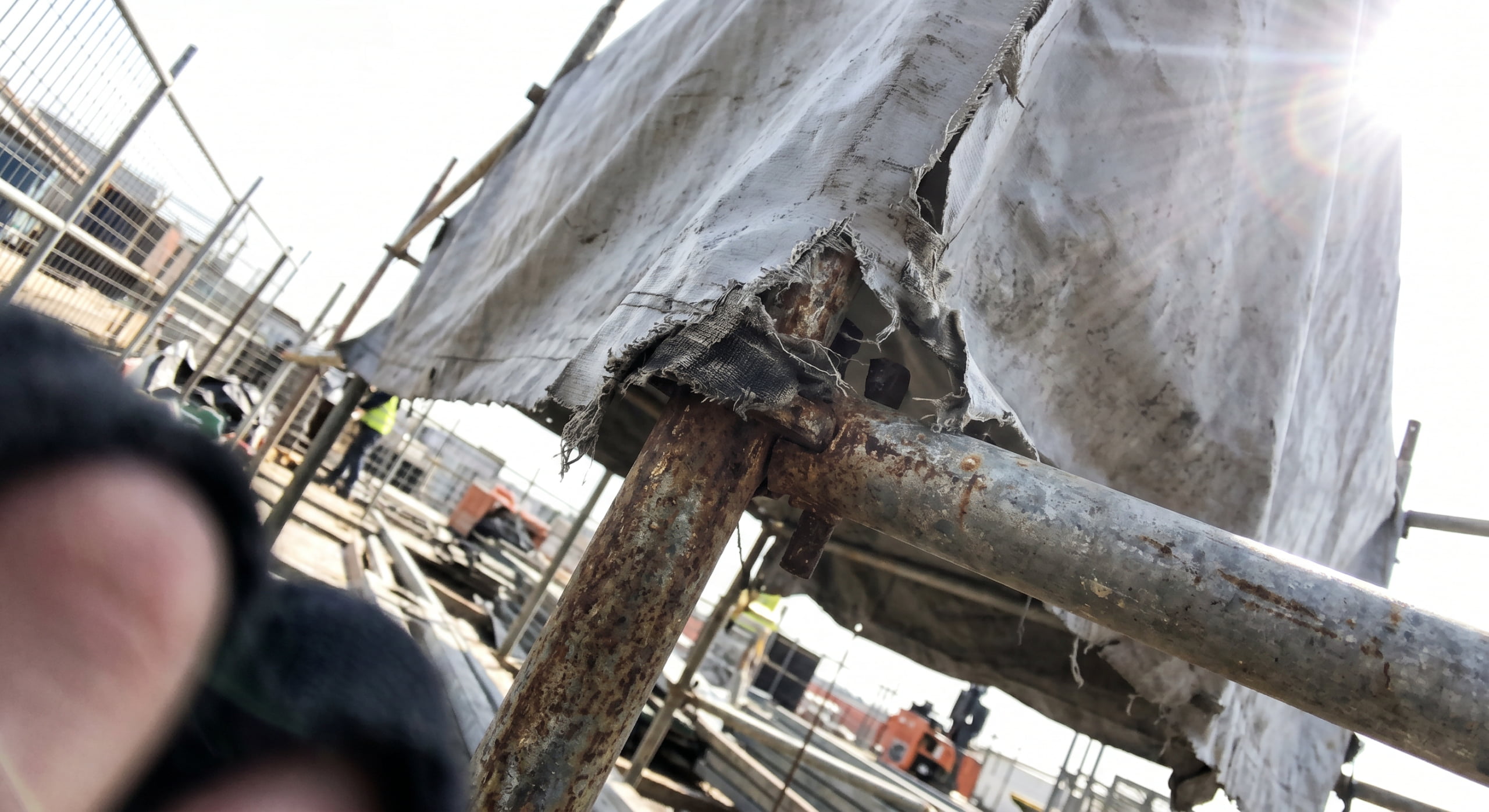
Picture a 900GSM2 PVC panel the size of a truck. When it goes slack by just one centimeter, a 150km/h gale turns it into a weapon. The fabric whips against the Q345 steel frame tens of thousands of times per hour. We call this "death flutter5" in the industry. It doesn't matter how thick your material is. The high-frequency friction will cut through the best rain-resistant coating in months.
I've inspected shelters where the fabric looked perfect from 10 meters away. Up close, the contact points showed severe abrasion. The waterproof layer was completely destroyed. Rain was seeping through during storms. The client thought they bought a 10-year shelter. It failed in 18 months.
This is why Prime shelters use specialized self-locking tension systems15. We don't just install the fabric and walk away. Our installation protocol requires secondary tensioning verification. We measure fabric tautness with calibrated instruments. The entire structure needs to be tight like a drum that rings when you tap it. This completely dissipates wind pressure instead of letting it create destructive oscillation.
Here's the engineering reality behind proper tensioning:
| Tensioning Method | Initial Tension (N/5cm) | Retention After 6 Months | Wind Flutter Risk |
|---|---|---|---|
| Standard Ratchet Strap | 800-1000 | 60-70% | High (severe in 120km/h+) |
| Premium Ratchet + Manual Re-tension | 1200-1400 | 75-85% | Moderate (requires quarterly maintenance) |
| Prime Self-Locking System | 1500-1800 | 92-98% | Minimal (auto-adjusts for thermal expansion) |
The self-locking mechanism we developed uses spring-loaded tensioners that automatically compensate for thermal expansion and contraction. When the PVC heats up during the day and expands slightly, the system gives it room. When it contracts at night, the springs pull it taut again. The fabric never goes slack enough to flutter.
Standard ratchet straps can't do this. They're set to one fixed tension. After a few thermal cycles, they're loose. The client has to send crews to re-tension every three months. In remote mining sites, that's expensive and often forgotten. Our system eliminates that maintenance burden entirely.
I saw this technology save a project in northern Canada. Winter temperatures hit -40°C at night. Daytime sun warmed the fabric to +15°C. That's a 55-degree swing. The PVC was expanding and contracting significantly. With standard tensioning, the shelter would have been in constant flutter mode, destroying itself within one winter. Our self-locking system kept it drum-tight through the entire season. Zero flutter damage. Zero maintenance calls.
The physics is simple. The execution is hard. Most manufacturers don't invest in this level of engineering because it costs more upfront. They'd rather sell cheaper systems and let the client deal with failures later. We build for 10-year lifecycles in the harshest conditions on earth. That requires real mechanical engineering, not just thick fabric and marketing claims.
Why do mining operations demand AS/NZS compliance16 beyond basic CE certification17?
I've had European suppliers tell me their CE-certified shelters are "good enough" for Australian mining sites. They're wrong. CE certification17 tests for European weather conditions. It doesn't account for the unique wind patterns and structural loads in Australian cyclone zones or Canadian blizzard regions.
AS/NZS 1170.2 certification isn't just a regulatory checkbox—it's an engineering validation18 that your shelter can survive region-specific extreme weather events, including cyclonic winds up to 150km/h and snow loads exceeding 2.5kPa, which standard CE testing doesn't adequately address.
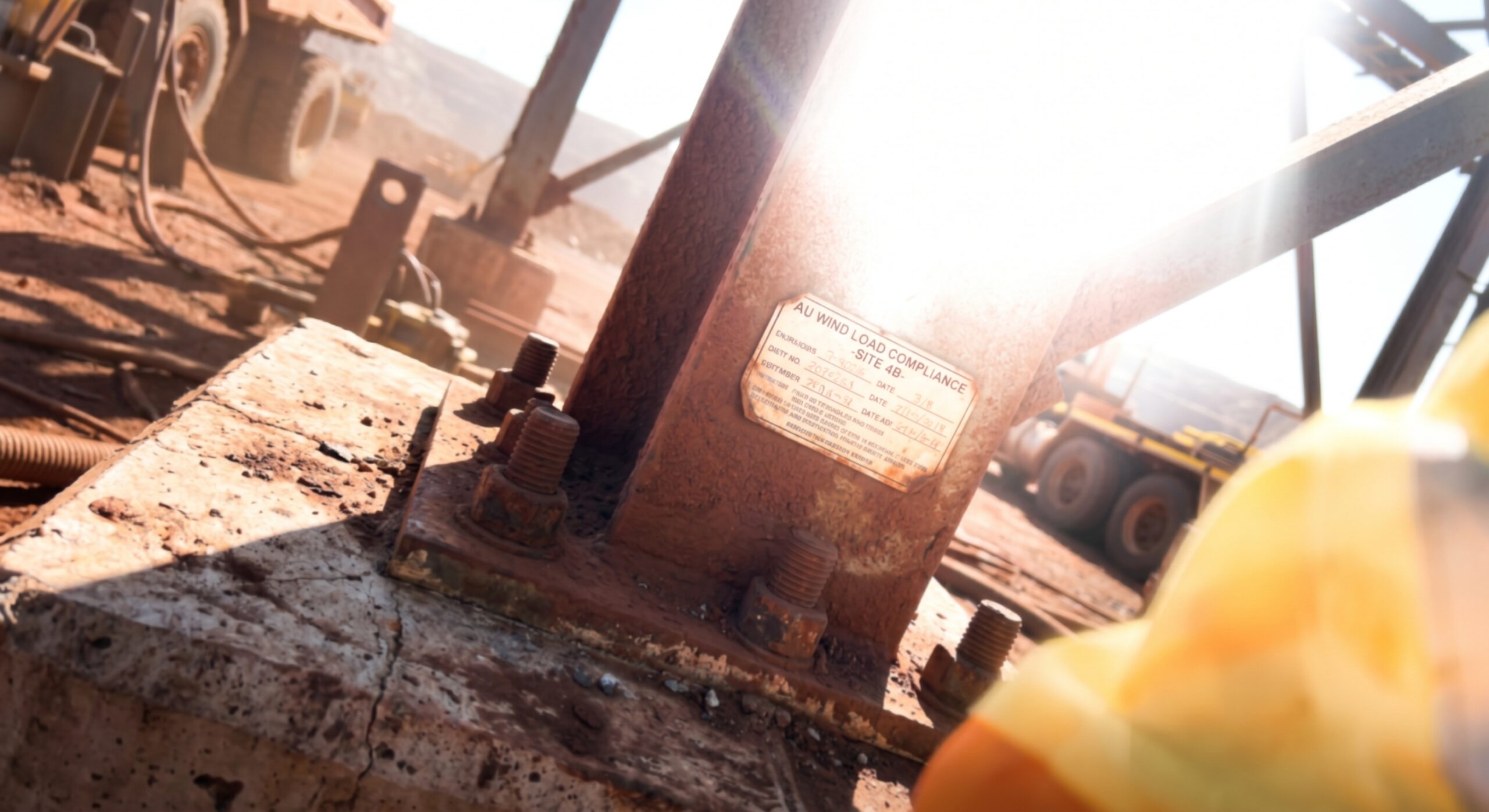
Australian mining companies operate under strict safety regulations. If a shelter collapses and injures a worker, the mine operator faces massive liability. They need stamped engineering drawings from certified structural engineers19. They need wind load calculations20 specific to their site coordinates. CE certification17 alone doesn't provide this.
We work with licensed structural engineers19 in Australia and New Zealand who certify each shelter design for the specific site conditions. They calculate wind pressure based on local topography. They factor in terrain category and height above sea level. The resulting engineering report becomes part of the building permit application. Without it, many local councils won't approve the installation.
Here's what comprehensive structural certification actually covers:
| Certification Type | Wind Speed Rating | Snow Load | Site-Specific Analysis | Legal Validity |
|---|---|---|---|---|
| CE (European Standard) | Up to 120km/h | 75kg/m² | Generic zones | Limited outside EU |
| AS/NZS 1170.2 | Up to 150km/h | 150kg/m² | GPS coordinates required | Australian/NZ legal requirement |
| Prime Full Engineering Package | Up to 150km/h | 150kg/m² + safety factor | Includes soil bearing capacity | Globally recognized |
The AS/NZS standard requires higher safety factors. A CE-certified shelter might be rated for 120km/h winds with a 1.5x safety factor. An AS/NZS certified shelter for the same site needs to handle 150km/h winds with a 2.0x safety factor. That's significantly more structural steel and stronger foundation anchoring.
I worked on a project in Queensland where the mining company initially accepted a cheaper CE-certified shelter from a Chinese trading company. The local council rejected the permit application. The shelter didn't meet AS/NZS 1170.2 requirements for cyclonic wind regions. The mining company had to scrap the entire order and start over. They lost three months of project timeline and $120,000 in wasted procurement costs.
When they came to Prime, we provided full structural engineering documentation within two weeks. The council approved it immediately. The shelter was installed and operational within six weeks. The project stayed on schedule. That's the value of proper certification—it's not just about safety, it's about project risk management and avoiding costly delays.
Conclusion
Protecting million-dollar machinery in extreme environments requires more than thick fabric and strong steel—it demands engineered ventilation systems to prevent condensation damage and advanced tensioning technology to eliminate destructive wind flutter. Real protection comes from understanding the physics, not just reading specification sheets.
Explore this link to understand the significance of Q345 double-truss in building durable structures. ↩
Learn about 900GSM fabric and its importance in ensuring durability and strength in harsh environments. ↩
Discover how wind ratings are calculated and why they matter for equipment protection. ↩
Understand the dangers of toxic rain and its impact on heavy equipment in extreme conditions. ↩
Find out how death flutter occurs and its implications for the longevity of fabric shelters. ↩
Explore the phenomenon of container rain and its effects on machinery stored inside shelters. ↩
Discover the significance of precision electronics in modern machinery and their vulnerabilities. ↩
Learn about hydraulic components and their critical role in the operation of heavy equipment. ↩
Delve into thermal dynamics and how they influence the design of effective protective shelters. ↩
Learn how microclimate management systems can protect valuable assets in extreme environments. ↩
Discover the critical role of ventilation engineering in protecting equipment from environmental damage. ↩
Understand the importance of ASHRAE standards in ensuring proper ventilation for industrial applications. ↩
Explore how thermal modeling is used to predict and manage temperature effects in structures. ↩
Understand the effects of fabric-to-steel impacts on the integrity of fabric structures. ↩
Learn about the innovative self-locking tension systems that enhance the durability of fabric shelters. ↩
Explore the significance of AS/NZS compliance in ensuring safety and structural integrity in Australia. ↩
Understand the implications of CE certification and its limitations in extreme environments. ↩
Understand the concept of engineering validation and its role in ensuring safety and compliance. ↩
Learn about the vital contributions of structural engineers in ensuring safe and compliant designs. ↩
Discover the process of wind load calculations and their importance in structural engineering. ↩